
A Simple Guide to ICF Credentials & Why They Matter: Demystifying Coaching
TRAININGS
1/20/20265 min read
Imagine stepping into a coaching session where TRUST, PROFESSIONALISM, & EXCELLENCE are guaranteed. That’s the power of the International Coaching Federation (ICF).
Founded in 1995, ICF has become the global gold standard for coaching. Its credentials aren’t just certificates—they’re proof of a coach’s dedication to ETHICS, SKILL, & CONTINOUS GROWTH. For clients, it’s reassurance that they’re in safe, capable hands.
1. Trust & Credibility
Clients want assurance that their coach is skilled and ethical.
An ICF credential is like a seal of approval—it shows you’ve met rigorous global standards.
It builds instant confidence and sets you apart from uncertified coaches.
2. Professional Recognition
ICF is the largest and most respected coaching body worldwide.
Holding its credentials signals that you’re part of a recognized, elite community.
Organizations and HR departments often prefer or require ICF-certified coaches.
3. Career Growth & Opportunities
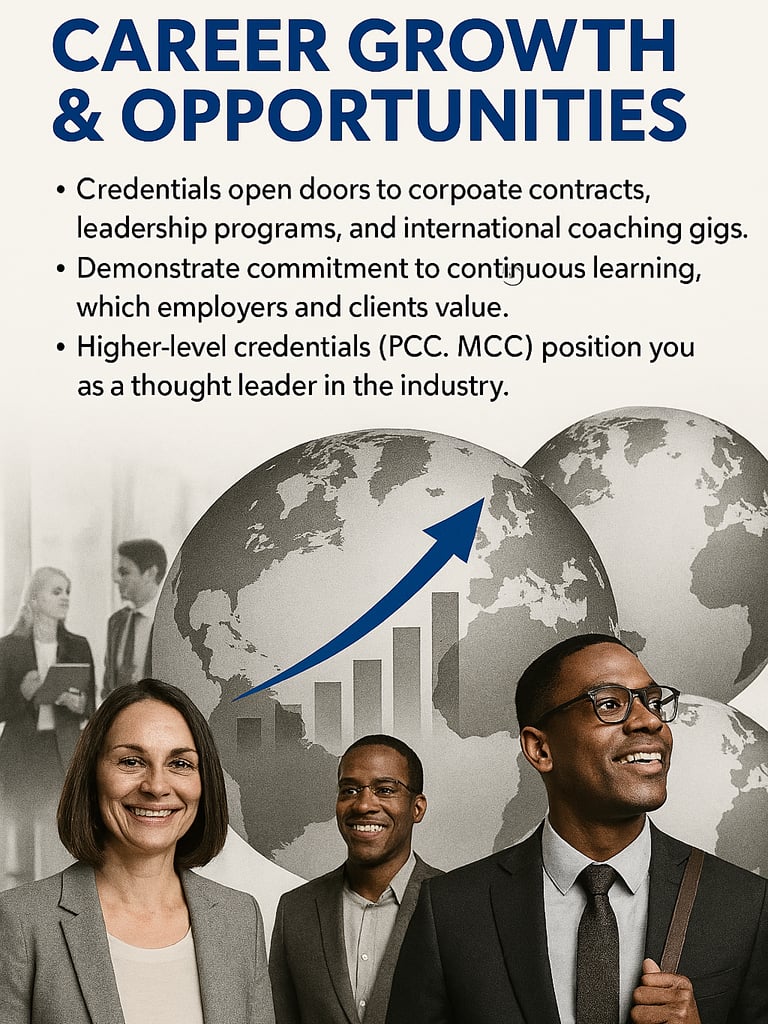
Credentials open doors to corporate contracts, leadership programs, and international coaching gigs.
They demonstrate commitment to continuous learning, which employers and clients value.
Higher-level credentials (PCC, MCC) position you as a thought leader in the industry.
4. Ethics & Standards
Coaching isn’t just about asking questions—it’s about responsibility.
ICF enforces strict ethical guidelines, ensuring coaches act with integrity.
Clients know they’re protected by a professional code of conduct.
5. Client Transformation
Credentialed coaches are trained to deliver structured, impactful results.
They use proven methodologies aligned with ICF’s 8 core competencies.
This means clients experience deeper insights, accountability, and lasting change.
6. Global Community & Networking
Being credentialed connects you to a worldwide network of professionals
You gain access to events, resources, and collaborations that fuel growth.
It’s not just a certificate—it’s entry into a thriving coaching ecosystem.
✨ In short: ICF credentials matter because they elevate coaching from a casual practice to a recognized profession. They build trust, open opportunities, uphold ethics, and ensure coaches deliver real transformation.
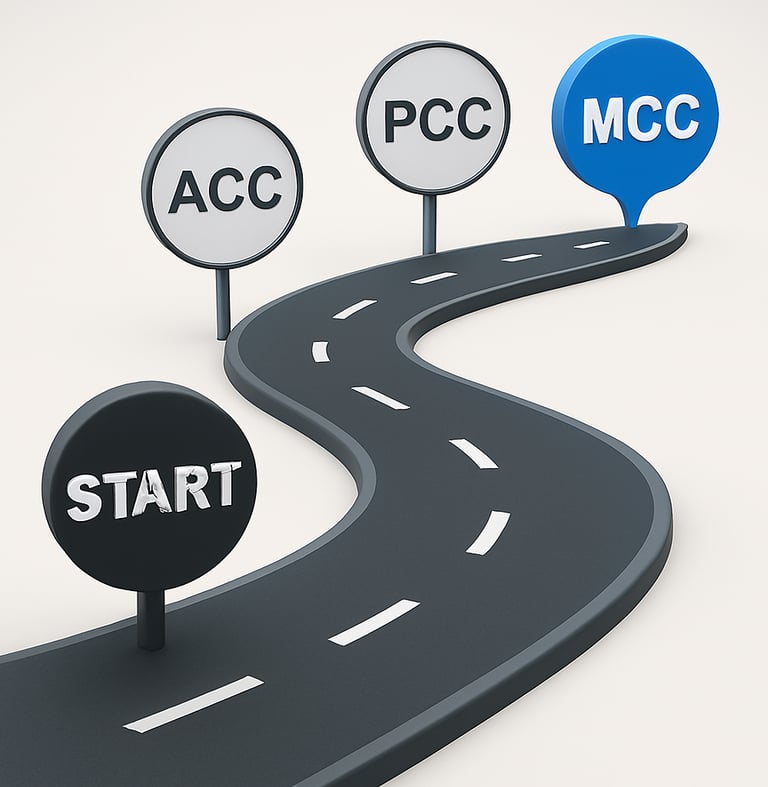
Your journey as a coach is like leveling up in a game:
Start with ACC—learn the basics, practice with clients.
Move to PCC—deepen your skills, expand your reach.
Aim for MCC—mastery, mentorship, and leadership.
Mentor coaching, assessments, and thousands of hours of practice make this journey transformative—not just for you, but for the clients you serve.
🎓 The Three Levels of ICF Credentials
Think of ICF credentials as climbing a ladder of mastery:
ACC (Associate Certified Coach)
Entry-level. Requires 60+ hours of training and 100+ coaching hours. Shows you’ve built a strong foundation.PCC (Professional Certified Coach)
Mid-level. Requires 125+ hours of training and 500+ coaching hours. Demonstrates advanced skills and versatility.MCC (Master Certified Coach)
Top-level. Requires 200+ hours of training and 2,500+ coaching hours. Recognized as the pinnacle of coaching excellence.
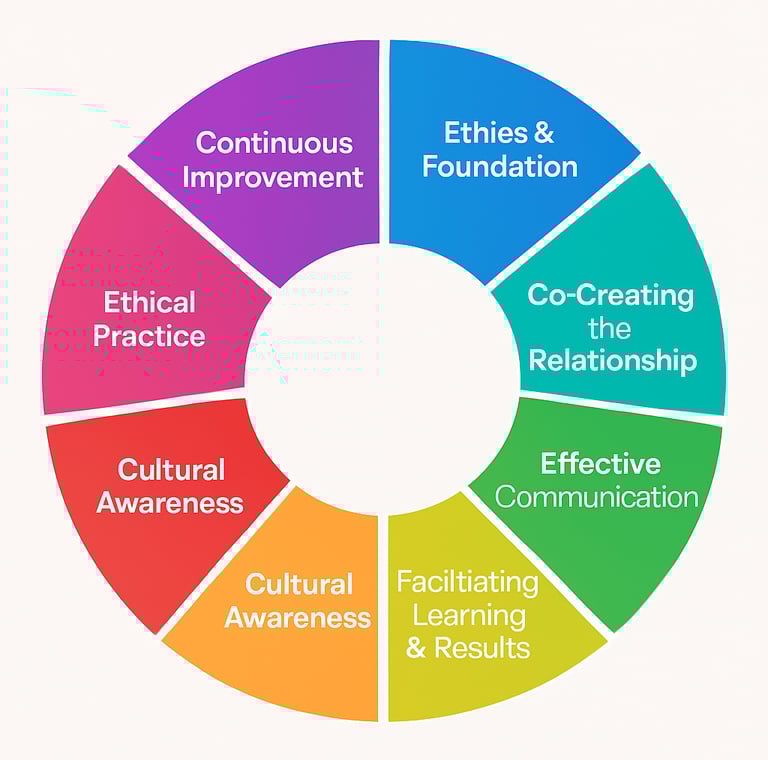
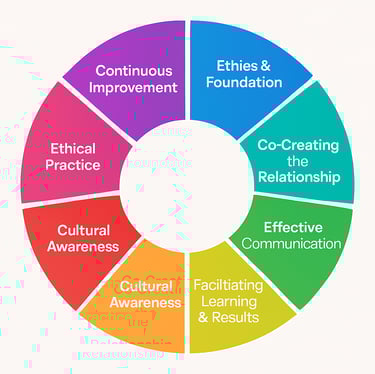
The 8 Core Coaching Competencies
ICF defines 8 must-have skills every coach should master:
Ethics & Foundation – integrity, confidentiality, agreements.
Co-Creating the Relationship – trust, respect, collaboration.
Effective Communication – active listening, powerful questions.
Facilitating Learning & Results – reflection, accountability, growth.
Structuring the Process – managing time and flow.
Cultural Awareness – aligning with client’s environment.
Ethical Practice – professionalism in every interaction.
Continuous Improvement – lifelong learning and feedback.
❓ FAQs: Coaching & ICF Credentials
Q1: What exactly is coaching?
Coaching is a one-on-one partnership where a coach helps you set goals, explore possibilities, and achieve results.
Q2: How do I pick the right coach?
Look for ICF credentials, relevant experience, and someone whose style feels like a good fit for you.
Q3: Why is ICF accreditation valuable?
It’s proof that a coach meets global standards of training, ethics, and professionalism.
Q4: Are all coaches ICF certified?
Nope! But ICF-certified coaches have gone through rigorous training and assessments.
Q5: How can I check a coach’s credentials?
Easy—ICF has an online directory where you can verify certifications.
Q6: What happens in the first session?
You’ll set goals, discuss expectations, and see if the coach-client fit feels right.
Q7: How long does coaching take?
It varies—some need a few sessions, others continue for months or years.
Q8: Is coaching online or in-person?
Both! Many coaches offer flexible options to suit your lifestyle.
Q9: How much does coaching cost?
Prices vary depending on the coach’s experience and services. Think of it as an investment in yourself.
Q10: Can coaching replace therapy?
No. Coaching helps with growth and goals, but mental health concerns should be addressed by licensed therapists.
✅ Conclusion
ICF credentials are more than titles—they’re a commitment to excellence. Whether you’re starting at ACC or aiming for MCC, the journey elevates your career and strengthens the coaching profession.
For clients, choosing an ICF-certified coach means choosing trust, ethics, and transformation. For coaches, it’s a pathway to mastery and impact.
Why Continuous Learning Matters:
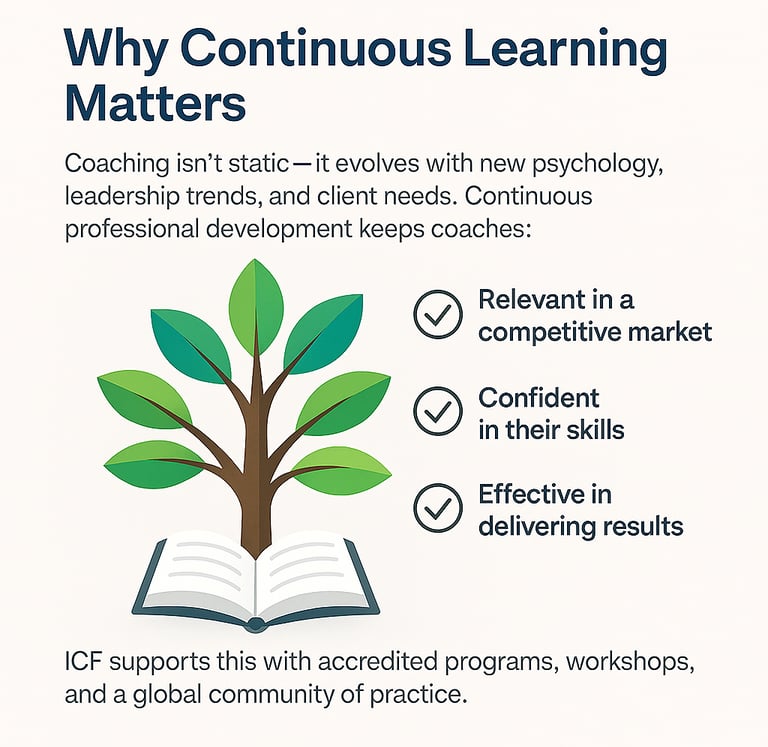
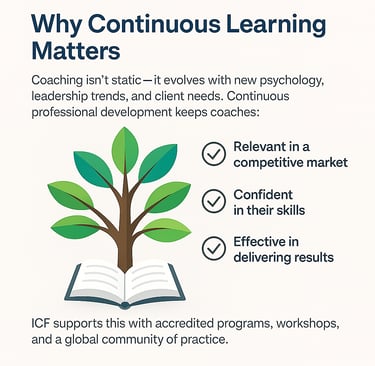
Coaching isn’t static—it evolves with new psychology, leadership trends, and client needs.
Continuous professional development keeps coaches:
Relevant in a competitive market.
Confident in their skills.
Effective in delivering results.
ICF supports this with accredited programs, workshops, and a global community of practice.
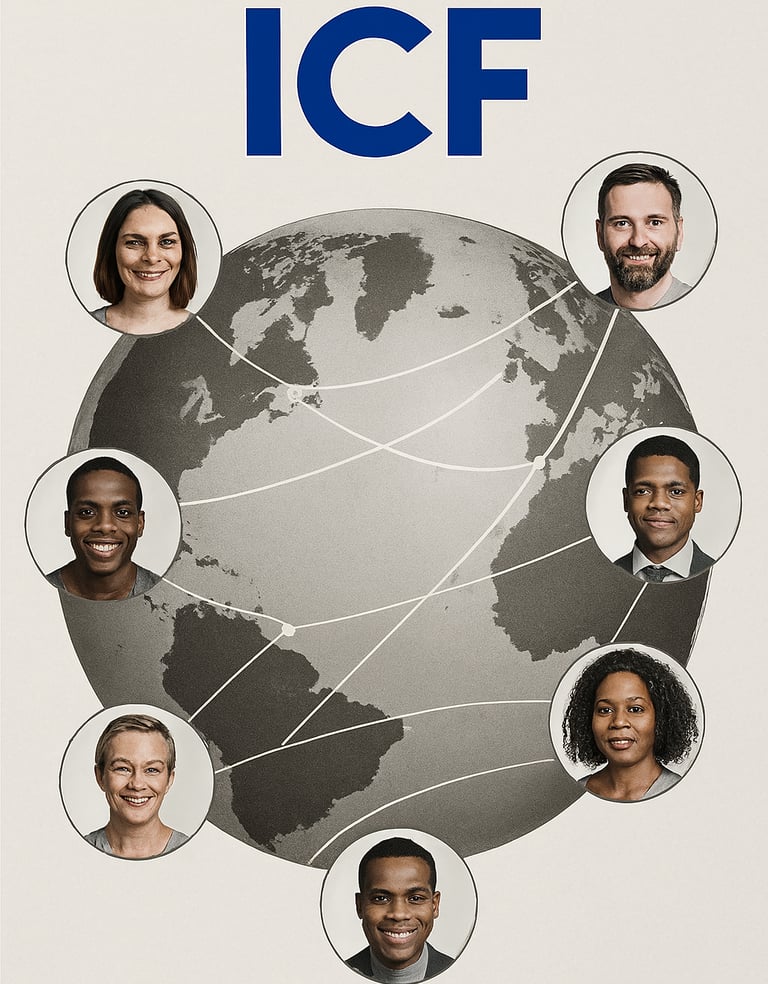
Why ICF Credentials Matter
The Roadmap: From ACC to MCC


Build Your Growth Ecosystem
Let’s discuss how we can integrate HRDC-accredited training with professional coaching to create a lasting impact in your organization.
✨ Work With Me ✨
I partner with visionaries and organizations to bridge the gap between technical strategy and human performance:
🎯 Marketing Strategy: Leverage my expertise as a VETASSESS/AMI Certified Marketing Specialist (ANZSCO 225113) to build high-impact brand authority.
🌍 Global Leadership: Gain insights from my experience as the G100 Malaysia Country Chair & a Royal-Commended Mentor to navigate regional influence.
🧭 Professional Coaching: As an ICF Certified Coach, I help you find your "compass"—unlocking the mindset needed to lead with purpose.
🛫 Global Communication: As a Certified Professional PTE Trainer, I provide expert coaching to help you master global study and career opportunities.
I am here to partner with you on your next transformation.
📩 DM me today or visit techsetgo.my to take the next step in your journey—together.